


 (425) 402-7878
 ASE-Certified Auto Mechanics
 2-year/ 24,000-mile Warranty
 Dealership-Level Equipment
 Free Loaner Cars Available
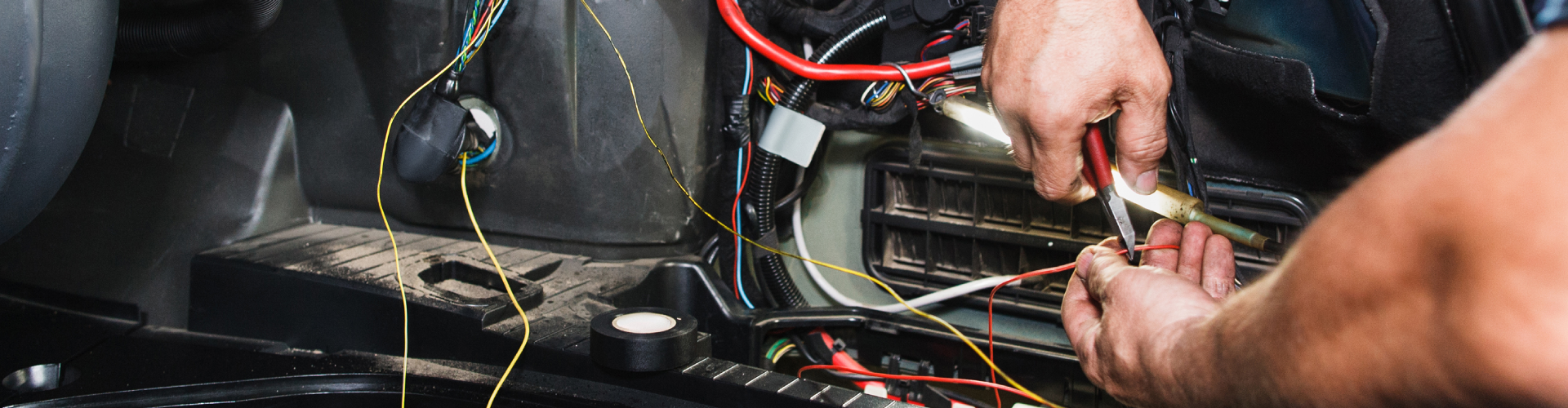
The driver’s window switch quits. A week later the mirrors stop folding, a tail lamp fault appears, and the low beams give up on the drive home from Kirkland. Most owners read that as four problems. It is almost always one. Modules on an E90 or an F30 talk over a shared bus, so a single unit that stops answering can silence half the car while a shop swaps parts by code number.
Quick Takeaways
- The FRM is the usual suspect: On 2007–2013 E90 and E82 cars, a corrupted footwell module takes windows, mirrors and lighting with it.
- A no-start is often the immobiliser: CAS on E-chassis BMWs and EWS on the E36 and E46 both read like a dead starter.
- A new battery has to be registered: Skip it and the IBS keeps charging to the old battery’s profile.
- Grounds corrode before modules die: A fraction of a volt lost at a chassis ground sets codes in four modules at once.
- Replacement modules need coding: A donor unit carries the wrong VIN.
Our Methodical BMW Electrical Diagnostic Process
Electrical “gremlins” are rarely solved by guessing. We follow a structured protocol to ensure we replace only what is necessary.
The FRM Failure Takes Out Windows, Mirrors and Lights
When those three die together, the footwell module is the first thing we test. The FRM3 fitted to E9x and E8x cars built roughly 2007 to 2013 holds its configuration in memory that corrupts during a voltage dip — a jump start, a dying battery, a botched charge. Then one-touch windows stop, folding mirrors go dead, and the cluster reports rear light faults no bulb will clear. Some FRMs can be recovered by reflashing. Others get replaced and coded.
CAS and EWS Faults Look Exactly Like a Dead Starter
A BMW that cranks without firing, or sits silent reading "Remote Key Not Detected," usually has an immobiliser problem rather than a starter problem. On E-chassis cars the Car Access System reads the key through an antenna ring at the ignition slot, and a weak ring, a dead transponder or a CAS out of sync all look identical. Older E36 and E46 models run EWS on the same logic. We test before condemning anything. Used modules carry their own ISN, which has to match the car.
Battery Registration Is Part of the Battery Job
Fitting a BMW battery without registering it is half a repair. The Intelligent Battery Sensor at the negative terminal tracks current, temperature and state of charge, and power management builds its whole charging strategy from what that sensor reports. Give the car a new AGM and tell it nothing, and it keeps charging to a worn cell's profile. You get chronic undercharge, early failure, and a car that starts switching off heated seats to protect voltage it thinks it lacks. Registration takes minutes.
Parasitic Draw Explains the Car That Kills Its Own Battery
If your BMW is flat after three days parked, something on the bus refuses to sleep. We clamp an ammeter on the negative cable and wait, because a modern BMW needs twenty to thirty minutes to shut its network down and a reading taken sooner measures a car going to bed. Then we pull fuses. Amplifiers, telematics units, hardwired dashcams and a trunk lamp switch that never opens are repeat offenders. But aftermarket alarms lead the list.
A New Module Is Not Finished Until It Is Coded
Bolting in a control unit does not finish the repair. Every module has to be programmed to your VIN and brought in line with the car's integration level, or it works alone and argues with everything around it. Most general shops stop there. And that is why these cars reach us after somebody else gave up. Our technicians are ASE-certified, we run BMW-compatible factory tooling, and a 2-year/24,000-mile warranty covers the work.
Electrical diagnosis rewards patience. Take the free loaner. Drivers reach us from Bothell, Kenmore, Kirkland, Mill Creek, Redmond, Monroe and Snohomish, most of them off SR-522 or the SR-202 corridor.
Our 24-month/24,000-mile warranty backs every clutch replacement.
Frequently Asked Questions
Can a BMW FRM module be repaired instead of replaced?
Often, yes. Many FRM3 units that look dead have only corrupted their stored data, and the right software brings them back. When the hardware has genuinely failed, the replacement gets coded to your VIN.
Does a new BMW battery need to be registered?
Yes, on any BMW with an Intelligent Battery Sensor. Registration tells power management it is dealing with a fresh battery, and coding tells it whether that battery is AGM or conventional before the first charge cycle. Otherwise the new one ages early.
Why does my BMW battery keep dying overnight?
Something draws current after the car should be asleep. We measure at the negative cable once the network shuts down, then isolate the circuit fuse by fuse. Alarms and amplifiers cause most of it.
My BMW says "Remote Key Not Detected" and will not start. Is that electrical?
Usually. The message points at the key, the antenna ring that reads it, or the CAS module. We check the transponder and the ring signal first, because replacing a module for a fob fault solves nothing.
Schedule Your BMW Electrical Diagnosis
Bring the car to 12602 NE 178th Street, Woodinville, WA 98072. We are open Monday through Friday, 8:00 AM to 5:00 PM, and closed on weekends. Book online at woodinvillesportscars.com and tell us when the fault appears — cold mornings, after a wash, only on the freeway — because that detail shortens the hunt. Guessing costs hours.