

 (425) 402-7878
 ASE-Certified Auto Mechanics
 2-year/ 24,000-mile Warranty
 Dealership-Level Equipment
 Free Loaner Cars Available
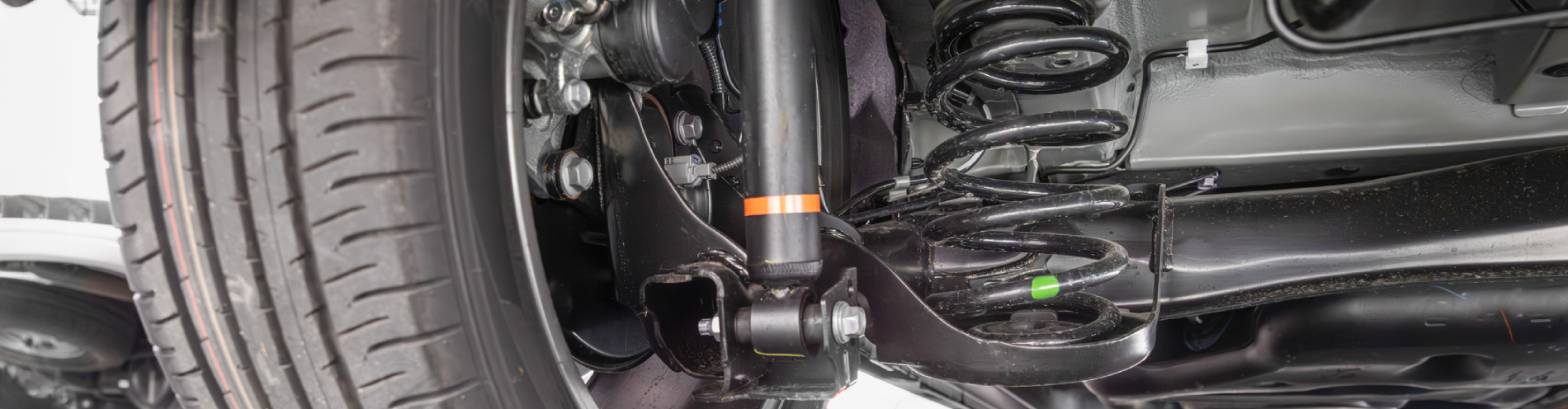
Suspension Repair for Porsche in Woodinville, WA
Porsche suspension systems span from the simple but precisely engineered MacPherson strut front and multi-link rear of the 718 to the hydraulic PDCC active anti-roll system on the 911 Turbo and Cayenne Turbo. All share the characteristic that the suspension geometry and electronic integration require PIWIS-compatible calibration after component replacement — not because it is a formality, but because PASM drive mode feel, PSM stability intervention thresholds, and Sport Chrono launch control all depend on correctly calibrated suspension reference data. At Woodinville Sports Cars, suspension repair is always completed with the PIWIS calibration procedures the system requires.
PDCC (Porsche Dynamic Chassis Control) Service
PDCC — available on the 911 Turbo (997 and later) and the Cayenne (9Y0) — uses active anti-roll bars to counteract body roll in corners. The hydraulic PDCC system on the 911 Turbo uses a hydraulic pump to pressurize the anti-roll bar actuators; the electric PDCC on the Cayenne uses electric actuator motors. PDCC pump failure on the 997 Turbo produces a PDCC warning and progressive loss of anti-roll correction — the car rolls noticeably more in corners. PDCC actuator wear on the Cayenne produces the same symptom.
PIWIS diagnoses PDCC fault codes and reads actuator function data — distinguishing between pump failure, actuator wear, line leaks (hydraulic PDCC), and wiring faults. PDCC repairs range from hydraulic pump replacement on the 997 Turbo to electric actuator replacement on the Cayenne, and all require PIWIS to verify correct system pressure or actuator range after repair.
Cayenne Suspension Control Arm Service
Cayenne 9Y0 and 92A models use aluminum front control arms — a durability upgrade over the steel arms on the 9PA — but the control arm bushings still wear at high mileage, particularly on vehicles driven on Washington's secondary road network. Worn front bushings on a Cayenne produce vague steering, clunking over rough pavement, and a tendency to follow road camber under moderate braking. The symptoms develop gradually and are sometimes attributed to tire wear or inflation rather than the actual cause.
We replace Cayenne control arms as a unit — bushing and arm together — on most high-mileage applications, and follow every control arm replacement with a four-wheel alignment to restore the Cayenne's suspension geometry to Porsche specification.
911 and 718 Suspension Service
The 911 and 718 suspension is simpler than the Cayenne — MacPherson strut front on the 718, LSA (Lightweight Sports Axle) or standard MacPherson on the 911 depending on variant. Strut wear, control arm bushing wear, and sway bar end link failure are the most common service items at high mileage. Every suspension repair on 911 and 718 models includes a four-wheel alignment — the rear toe on the 911 in particular is critical to the car's characteristic stability under trail braking and cannot be allowed to drift from specification. PSM recalibration through PIWIS follows any work involving steering angle or wheel speed sensors. For related Porsche services, see our Porsche brake repair page for brake service that often accompanies suspension work, our Porsche tire service page for alignment and tire wear concerns, and our Porsche electrical repair and module coding page for PASM and PSM module coding.
Quick Takeaways
- PASM (Porsche Active Suspension Management) dampers require PIWIS calibration after replacement — the suspension control module must learn each new damper’s characteristics.
- PDCC (Porsche Dynamic Chassis Control) on Cayenne and 911 Turbo uses hydraulic or electric active anti-roll bars — pump failure and actuator wear are the most common faults.
- Front control arm bushings on the Cayenne 9Y0 and 92A wear at high mileage and produce handling changes that owners often attribute to tire wear or alignment drift.
- PSM recalibration through PIWIS is required after any suspension work involving wheel speed or steering angle sensor components.
- All Porsche suspension repairs at Woodinville Sports Cars carry our 24-month/24,000-mile warranty.
Restoring Your Porsche’s Precision Handling & Suspension
From worn bushings to adaptive dampening faults, we restore the razor-sharp handling your vehicle was engineered to deliver. We serve performance drivers throughout:
Drop your vehicle off at 12602 Northeast 178th Street, located a very short distance from State Route 522 (WA-522), so you can stay on the go without missing a beat.
Frequently Asked Questions
What does PDCC failure feel like?
A PDCC warning light and noticeably increased body roll in corners are the primary symptoms. On a 997 Turbo or Cayenne, where PDCC previously kept the car very flat, the increase in roll feels significant. The car remains controllable — PDCC supplements rather than replaces mechanical roll stiffness — but the handling character changes noticeably.
Does Woodinville Sports Cars perform four-wheel alignments on Porsche models?
Yes, using a computerized alignment rack. Alignment is standard after any suspension component replacement and available as a standalone service for Porsche models showing uneven tire wear or handling changes.
How long does Porsche suspension repair take?
PASM damper replacement is two to four hours per corner plus calibration time. Cayenne control arm replacement is two to three hours plus alignment. Full Cayenne four-corner PASM service is a full day. PDCC repairs vary by component.
Can Woodinville Sports Cars lower my Porsche suspension?
We install aftermarket suspension components, including lowering springs and coilover systems. All suspension modifications are followed by a four-wheel alignment, and on PASM-equipped models, we perform the required PIWIS calibration after any damper change.